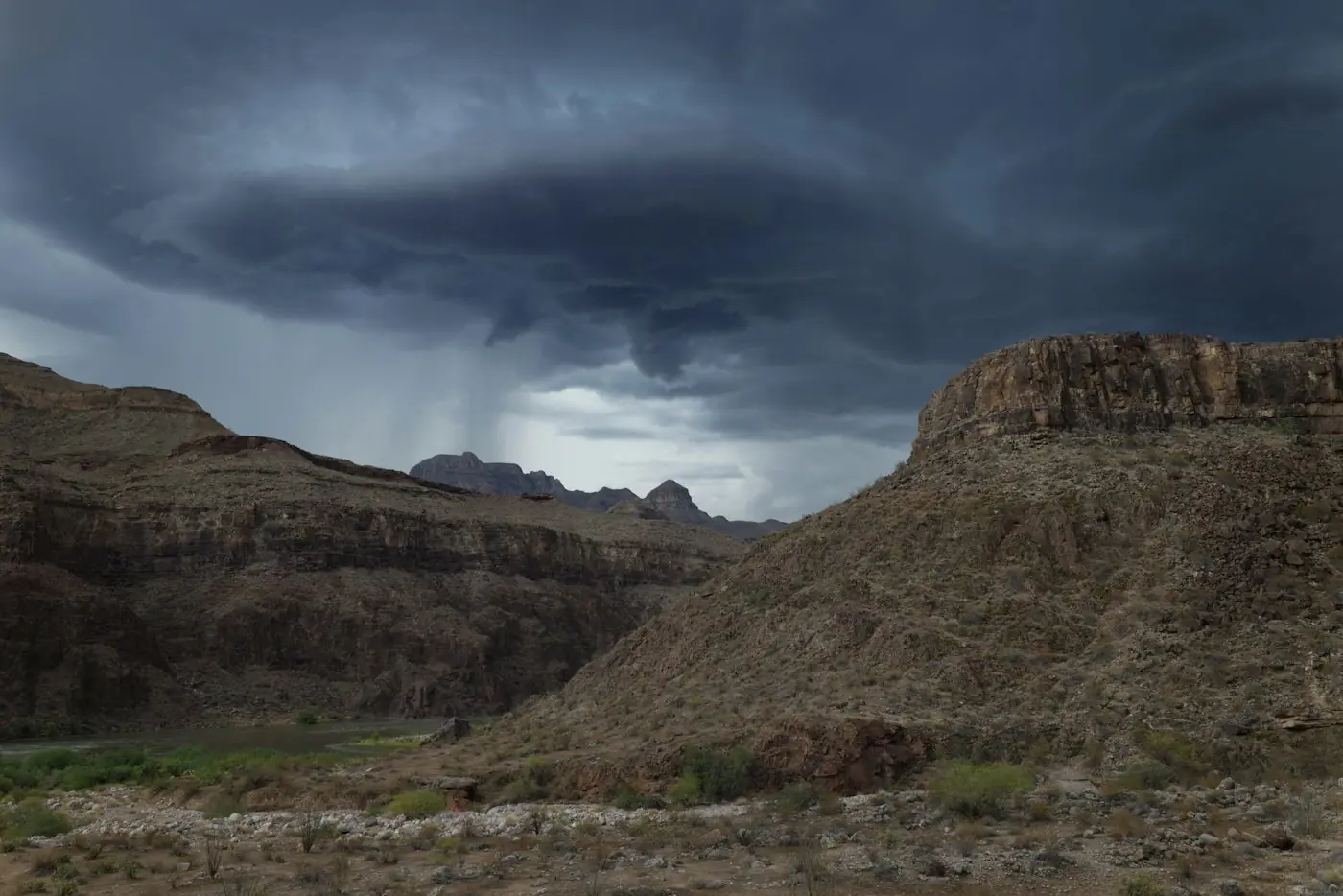
Every Tucson summer there is a day when the sky to the southwest turns brown and the wind arrives before the rain. Ten minutes later there is dust on every windowsill. Some of it also went into your ducts. Here is how that happens, and what to do before and after a storm.
When monsoon season is
The National Weather Service defines the Arizona monsoon as June 15 to September 30. The dust storms come mostly in the first half, when thunderstorms build over the mountains and their outflow pushes a wall of dust across the open desert. Tucson usually sees a few big ones a year and a lot of smaller blows.
How dust gets into the ducts
- Through the return. Your return registers pull air from the rooms. Dust that blew in under the doors and through the window frames gets pulled into the return ducts and through the filter. A clogged filter lets more past, and a filter that does not fit lets everything past.
- Through the attic. Attic vents are built to let air through. In a dust storm they let dust through too. Any gap in an attic duct joint, and there are usually several, pulls that dust straight into the supply side.
- Through the cooler. A swamp cooler is an open box on the roof with a fan in it. If it is running during a storm, it is pumping dust into the plenum. If it is sitting uncovered with the damper open, dust falls in anyway.
- Through a rooftop unit. Package units take their air from the roof. The filter catches some. The rest coats the coil and blower.
Before a storm
- Put in a fresh filter in June. A filter at the end of its life lets more through. Do it before the season, not after the first storm.
- Check the filter fits. Light around the edges means dust goes around it.
- If you run a cooler, know where the damper is. When a storm is coming, turn the cooler off and close the damper. Turn it back on after the dust settles and the air clears.
- Look at your attic duct joints once. If you can get into the attic safely, look for flex duct that has pulled away from a boot or a joint that is taped with the wrong tape. Those gaps are where storm dust gets in year after year.
After a storm
- Check the registers. Pull one supply register and look at the first foot of duct with a flashlight. If it is coated, the rest is too.
- Replace the filter again if it looks loaded. One big storm can finish a filter.
- Check the cooler pads. Dust-caked pads stop cooling and start smelling. Rinse or replace.
- Watch for the signs over the next week. Dust puffing from vents when the system starts, a film on furniture within a day of cleaning, a dusty smell when the AC comes on. Those are the ducts.
Rule of thumb: one storm does not mean you need a duct cleaning. One storm plus dust blowing out of the registers afterward does.
What a cleaning does and does not fix
A proper cleaning removes what is inside the ducts now: storm dust, old dust, debris. It does not seal the attic joints that let the dust in. If the tech finds a disconnected or leaking duct, you will hear about it, and that is a job for an HVAC contractor. Fixing the gap is what stops the next storm from doing the same thing.
A note on smell after a storm
Monsoon also brings humidity. If a dusty duct gets damp, it can start to smell, and in a cooler home it almost always does. A musty smell that shows up a week or two after the first storms is usually that. If it does not clear with a fresh filter and new cooler pads, the ducts need cleaning, and sometimes a sanitizing treatment on top. See mold and duct sanitizing.
Dust from the registers after a storm? That is the ducts.
Air duct cleaning in Tucson or call (520) 000-0000. Quote before anyone comes out.
Get a free quote
Five quick questions. We call you back.