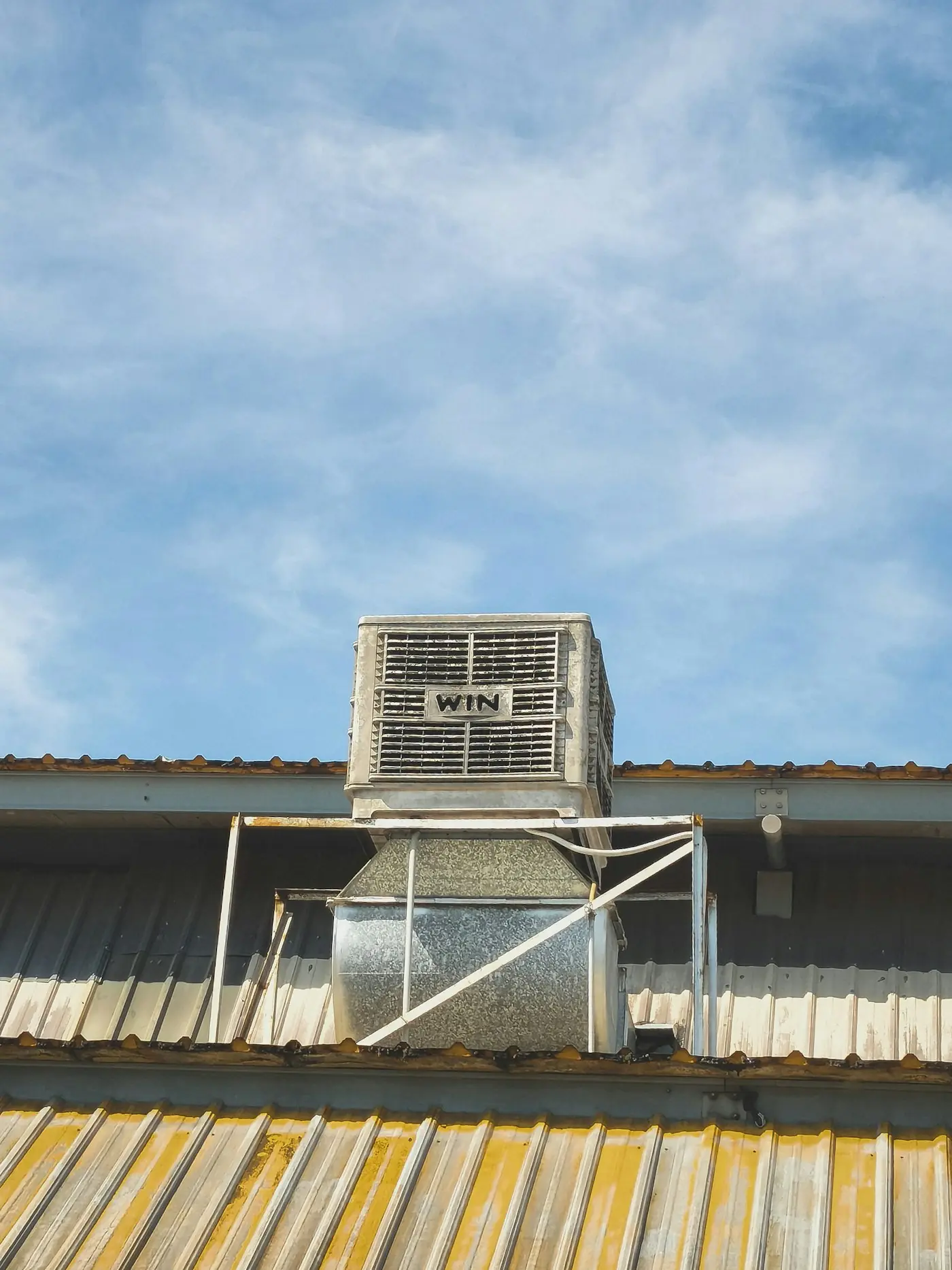
Tucson is one of the few big cities where a lot of homes still cool with water. If your house has a swamp cooler on the roof, or a cooler and an AC on the same ducts, the ducts live a different life from the ducts in an AC-only house. Here is what that means and what to do about it.
How the two systems treat your ducts
Air conditioning
An AC pulls air across a cold coil, which drops the temperature and pulls moisture out of the air. What goes into the ducts is cool and dry. Dust that gets past the filter stays dry too, so most of it blows through and settles in the slow spots: elbows, the ends of runs, and the return side.
Evaporative cooling
A swamp cooler pulls hot outside air through wet pads and pushes it into the house. The air is cooler because water evaporated into it, which means it is also damper. That is the whole point in a desert. Inside a duct, though, damp air changes what dust does. It sticks. It builds up in a film instead of blowing through, it holds a smell, and it gives mold something to live on.
The short version: an AC leaves dry dust in your ducts. A cooler leaves damp dust in your ducts. Damp dust is the one that smells and the one that comes back faster.
Why Tucson homes have both
A cooler works when the air is dry. In April, May and June, Tucson humidity sits in the single digits and a cooler can drop a house 20 degrees or more for a fraction of what the AC costs to run. Then monsoon arrives. From mid June to the end of September the humidity jumps, the cooler stops cooling, and people switch to the AC. In September or October the air dries out and the cooler goes back on.
So many Tucson houses run both, and in a lot of them the two systems share the same ducts. A damper, a metal flap in the duct, closes off whichever system is not running. When the damper seals properly, the AC side stays dry while the cooler is off. When it does not seal, damp cooler air leaks into the AC ducts and the air handler, and that side was never built for moisture.
What a cooler does to your ducts over a season
- A film on the duct walls. Fine desert dust lands on damp metal or damp flex duct and stays there. By the end of June the first few feet of duct under the cooler have a gray coating.
- Mineral scale. Tucson water is hard. As cooler water evaporates it leaves calcium behind on the pads, in the pan, and in the plenum directly below. Scale is rough, and rough surfaces hold dust.
- The spring smell. Over winter the cooler sits with whatever is left in the plenum and ducts. The first warm day you turn it on, the house smells musty for an hour. That smell is the buildup, not the new pads.
- Moisture in low spots. In older homes with metal ducts under the slab, cooler moisture settles at the low points of the run. That is the one situation where a spray will not fix anything and the duct needs a proper look.
What to do if you have a cooler
- Change the pads every spring and clean the pan. Old pads and a scaled-up pan are the first source of a smell. If the smell is still there with new pads, it is in the ducts.
- Check the damper. With the cooler running, hold a tissue at an AC supply register. If it moves, cooler air is leaking into the AC side. That needs fixing before the AC season.
- Clean the cooler ducts more often than AC ducts. The 3 to 5 year guidance for a typical home assumes dry air. Cooler homes typically need it every 2 to 3 years, and spring is the right time.
- Close the damper and cover the cooler for winter. An uncovered cooler lets cold air and dust fall straight into the plenum all winter.
- Look at the AC coil too. On a shared system the coil runs wet all monsoon season. Damp dust on the coil is the second most common source of a musty smell. See AC coil and HVAC cleaning.
What to do if you have AC only
Your ducts have it easier. Dust still builds up, especially after a dust storm or a remodel, but it stays dry and the ducts rarely smell. Keep the filter fresh, check the registers after monsoon, and have the ducts cleaned when you see dust puffing from the vents or a film on the furniture a day after cleaning. See air duct cleaning.
When to call
If your cooler has been running for a few seasons and you have never had the ducts done, or the spring smell comes back after new pads, that is the time. If you are not sure whether the smell is the pads or the ducts, call and describe it. We would rather tell you to change the pads than sell you a cleaning you do not need.
Swamp cooler ducts need their own cleaning.
Swamp cooler duct cleaning in Tucson or call (520) 000-0000. Quote before anyone comes out.
Get a free quote
Five quick questions. We call you back.